If workers on your Bridgeport site are applying paints, coatings, herbicides or insecticides, OSHA 1926.51(f)(1) requires washing facilities be available. Most construction jobs also need general sanitation under 1926.51(c). Bridgeport Porta Pros sets up handwashing stations alongside every portable toilet rental order, sized to your crew count.
The rule that trips people up is 1926.51(f)(1). It does not apply to every construction site. It applies specifically where employees are applying paints, coatings, herbicides or insecticides, or working around similar contaminants. If that is your crew, you need washing facilities on site, full stop. General sanitation, separate from that contaminant rule, falls under OSHA 1926.51(c), which sets toilet counts by crew size: one facility for 20 workers or fewer, then one toilet seat and one urinal per 40 workers as you scale past that. Neither rule technically forces a handwash sink next to every toilet, but 29 CFR 1910.141(d)(2) is the standard most inspectors point to for the actual equipment: soap and towels or a hand-drying device, not hand sanitizer alone. Bridgeport Porta Pros stocks stations that meet that standard, paired with standard porta potty rental units or dropped in as standalone equipment. If your Bridgeport crew handles chemicals or coatings regularly, pair a wash station with every few porta john rental units rather than clustering them at one end of the site.
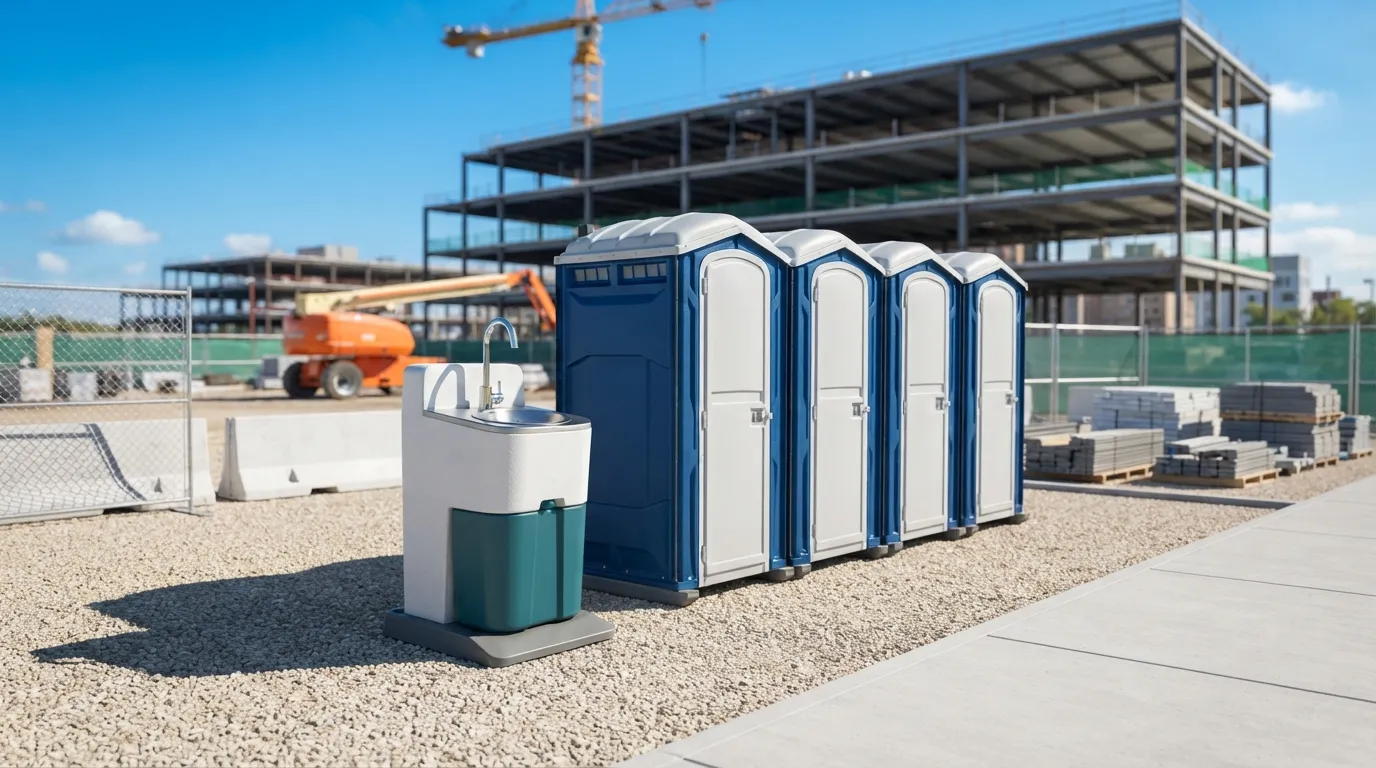
There is no fixed ratio in the OSHA construction rule the way there is for toilets, but ANSI/PSAI Z4.3 sets a baseline service interval of one visit per week for up to 10 users over a 40 hour week, which is a useful proxy for sizing. A crew of 20 doing routine framing in Bridgeport might get by with one or two stations. A crew of 20 spraying coatings or handling pesticides needs wash access close to the work, not just at the trailer. Farms and agricultural operations have their own standard: OSHA 1928.110 requires potable water, toilets and handwashing for hand-labor employees, with at least one facility per 20 employees and located within a quarter mile walk. That quarter mile figure matters. It means you cannot put a single station at the site entrance and call it done if workers are spread across acreage. We size handwashing setups for construction site services around actual crew distribution, not just headcount, and the same logic applies to farm and agricultural restrooms work outside the city.
Yes. OSHA 1926.51(a)(1) requires an adequate supply of potable water at all places of employment, and that includes what feeds your handwash stations. A station with an empty or contaminated tank does not satisfy the rule just by existing. Bridgeport Porta Pros fills and services tanks on a schedule, and every handwashing station rental gets checked on the same route as your toilet units so nobody runs dry mid-week. This matters more in summer, when a busy Bridgeport crew can burn through a stand's water faster than expected, and again in cold months covered in our porta potty in winter guide, when lines and tanks need extra attention. If your site also needs drinking water access, ask about pairing a portable sink rental with your restroom order instead of running two separate vendor calls.
Put them where the contaminant exposure happens, not just at the gate. If your crew is spraying, staining or applying pesticide near the west end of a Bridgeport lot, a station 200 feet away does not get used between tasks. Our porta potty placement guide covers ground stability and drainage, and the same rules apply to wash stations: level ground, no standing water underneath, and enough clearance for restocking. If you are running an accessible unit on site, remember ADA Standards section 213.2 requires that at least 5 percent of clustered single-user toilets be accessible, with a minimum of one, and the accessible unit needs a 60 inch turning circle under section 304.3.1. Wash stations placed near that unit should share the same clear, stable surface required for the toilet itself. For events, our event restroom rental and wedding restroom rental pages go into layout in more depth.
| Setup | What it includes | Best for |
|---|---|---|
| Standalone hand wash stand | Foot pump, soap, towel dispenser, fresh and grey water tanks | Small crews, food vendors |
| Paired with standard unit | Wash stand next to standard porta potty rental | Construction, general labor |
| Multi-station bank | Several stands serviced on one route | Festivals, county fair restrooms |
Delivery fees for standalone equipment typically run in the range covered on our porta potty rental cost page, and weekly service can be bundled with an existing route to save a separate stop. For longer jobs, check monthly porta potty rental pricing before committing to weekly billing.
No. 29 CFR 1910.141(d)2) is specific: washing facilities need soap and towels or a hand-drying device. Sanitizer alone does not satisfy that standard, even though it is common on job sites as a supplement between real handwash breaks.
Not automatically. OSHA ties handwashing requirements to contaminant exposure under 1926.51(f)(1) or general sanitation under 1926.51(c). Many Bridgeport crews add stations anyway for hygiene and site cleanliness, especially on food service or medical jobs.
ANSI/PSAI Z4.3 sets a baseline of one service visit weekly for up to 10 users over a 40 hour week. Busier sites, or ones near Stratford and Fairfield with larger crews, often need twice-weekly service to keep tanks stocked.
Yes. Standalone stations are common at food trucks, farm stands and small job sites. Bridgeport Porta Pros delivers them separately or bundled with portable restroom rental orders depending on what the site needs.
A handwashing station is typically foot-pump operated with fresh and grey water tanks built in. A portable sink rental can offer more basin space and is common for food service. Both meet the soap-and-towel standard under 29 CFR 1910.141(d)(2).
Yes. Bridgeport Porta Pros delivers handwashing station requirements across Bridgeport and the surrounding metro, with same-day and next-day drop-off available on most orders.
Pricing depends on the unit and how long you need it. See our cost breakdown and request a free quote for an exact figure.
Standard rentals include scheduled service — a pump-out, a clean, a restock and fresh deodorizer. Busy or hot-weather sites can be serviced more often.
Call now or request a free quote — clean units, on-time delivery, transparent pricing.